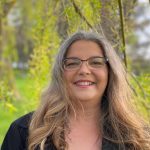
Faculty Member
Angela Mashford-Pringle PhD, Dalla Lana School of Public Health, University of Toronto
- Email Address(es)
- angela.mashford.pringle(at)utoronto.ca
- Office Address
- 155 College St., Room 564 Toronto, ON M5T 3M7
- Website(s)
- AMP Lab Research: Indigenous Health, Angela Mashford-Pringle: YouTube Chanel
- Division(s)/Institute(s)
- Social & Behavioural Health Sciences Division
- Position
- Associate Professor
- SGS Status
- Full Member
- Appointment Status
- Tenured
- Admin Position
- Division Head
- Currently Accepting Doctoral Students?
- Yes
Research Interests
*I am open to developing new collaborations with Indigenous Peoples, communities and organizations starting in January 2026.*
- Land and Environment to address Climate Change using Indigenous traditional knowledge including land-based learning
- Evidencing Inequities in Indigenous Peoples’ Health including criminal justice, child welfare, and food systems
- From Research to Action: Indigenous Health Policies and Cultural Safety Training
- Advancing Indigenous Data Sovereignty and Indigenous Methodologies in Public Health Research
- Indigenous land-based learning and pedagogies
Current Research Projects 2026/28 – for a fuller list see www.amplabresearch.com :
- Indigenous Research Methods & Theories including Data Sovereignty – This project will examine “other ways of knowing to improve Indigenous research”. We are just beginning this project.
- Anishinaabe Land-Based Learning for Culture and Language Revitalization – Working with Anishinaabe First Nations across Ontario and Quebec, we are developing programs to engage community members (on and off reserve) to engage in cultural and language programs to revitalize languages, ensure traditional knowledge is provided to all members and use Land-As-Teacher following traditional pedagogies and praxis. I am interested in collaborating with as many First Nations communities and urban Indigenous organizations around possible ways to develop and implement these programs while I provide evaluation for the programming.
- KEEP2 – In collaboration with Indigenous organizations who work with previously incarcerated Indigenous peoples, we are co-developing a Guidance Council for Healing, providing care packages to organizations for Indigenous peoples who are released from incarceration, and we are recruiting previously incarcerated Indigenous men and 2 Spirited and LGBTQQIIA+ people to hear their stories about release and reintegration.
- Akiikaa: It is the land – Using Indigenous land-based learning pedagogies and praxis, we are examining the impact of land as teacher to rethink 21st century educational curricula, ontologies, and praxis to improve the retention, learning experience, and wellbeing of students and educators.
Previous Research:
- Kijibashik: Turn It Around – Stories from Previously Incarcerated Indigenous Moms & Mom-Figures. The National Inquiry into Missing and Murdered Indigenous Women and Girls (2019) found to break the cycle of criminalization and over-incarceration, Indigenous communities must be given the capacity, resources, and support necessary to inform meaningful and sustainable programming that aids women in the transition from prison to society. This project has identified the mental, spiritual, physical, and relational implications of incarceration for Indigenous mothers. In collaboration with Indigenous women, Elders, Healers, several key Indigenous organizations, and researchers, the knowledge generated will inform the development of programs and services that support Indigenous mothers transitioning out of prison from a gender-inclusive and community-led perspective.
- New Respect Online Cultural Safety Training with Profession-Specific Modules: This project has been co-developed with the Indigenous Content Committee comprised of Elders, Senators and Knowledge Keepers. The foundational modules lead to profession-specific modules.
- Indigenous Child Welfare: A group of scholars and Indigenous community members heard the stories of Indigenous parents and caregivers who have had contact with child welfare/children’s aid in Ontario.
AMP Lab – Indigenous Wellbeing
Dr. Angela Mashford-Pringle (she/her) is a member of Timiskaming First Nation (Algonquin/Bear Clan) working in Indigenous wholistic health and wellbeing which includes culture, language, social issues, data and research methodologies, and policy. She is an Associate Professor and Indigenous Health Lead, Dalla Lana School of Public Health at the University of Toronto. Angela was the inaugural Director of the MPH-IH, and Founding Editor of the Turtle Island Journal on Indigenous Health (TIJIH). If you are a graduate student or FNIM community member interested in being a part of TIJIH, please click the link above. Angela collaborates with First Nations communities and organizations to examine Indigenous Peoples’ wholistic health and well-being. For more information on Dr. Mashford-Pringle’s current research and publications, please visit the AMP Lab website.
First Nations communities and organizations are encouraged to email Dr. Mashford-Pringle (angela.mashford.pringle@utoronto.ca) to discuss research, evaluation, and policy ideas.
Dr. Mashford-Pringle is accepting Masters (IHPME), Doctoral and Post-Doctoral Fellows beginning in January 2026 who have a background in Indigenous health and wellbeing.